.svg)

.svg)
.svg)
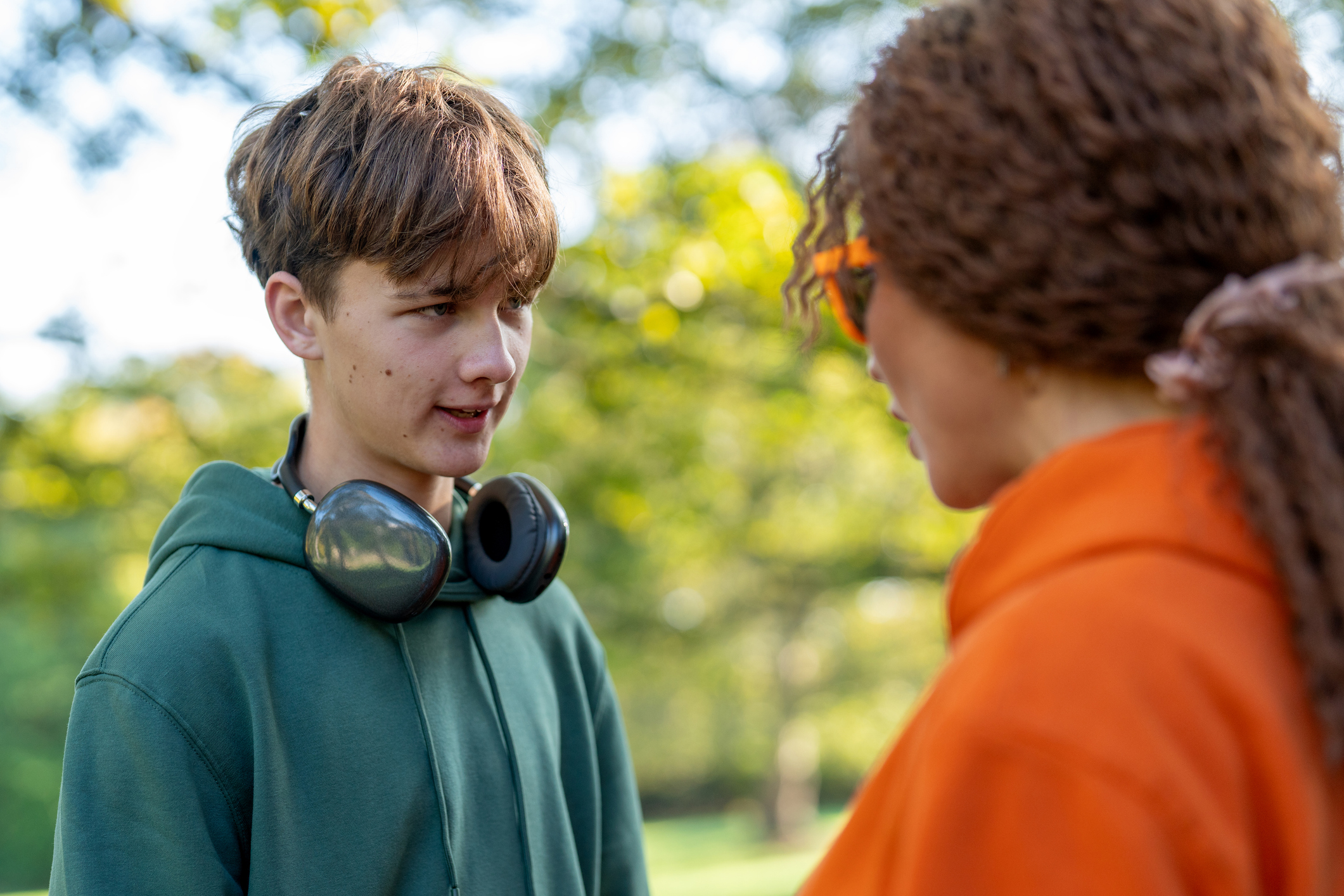
Oh, the teenage years…
Think back to your days of adolescence. I was an insecure, anxious teen who didn’t want anyone to know I had those feelings. As a result, I had what many adults would consider behavior management and attitude struggles.
I recently did an activity with some adults who work with teens. I asked them to finish this prompt: “I wanted adults to…” The answers were insightful and also a bit unsettling. There were many that jumped out at me. I am going to share just one:
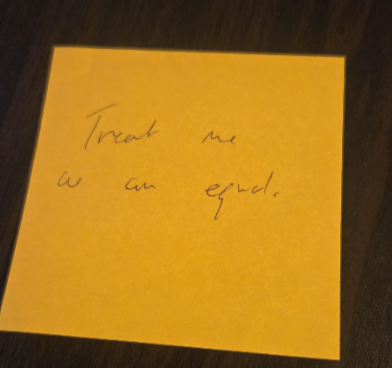
“Treat me as an equal.”
What a simple, yet big statement.
I played baseball when I was a young person. I was good at it. After my freshman year of high school, I was slated to play a robust 115 games in a summer league. I wanted to take a break and go to a football camp. When I told the adults in my life about this decision, it did not go over well. My coach said I had to get serious and choose a sport to focus on. My father said I would have to work to pay back the money he paid for me to play. My mother, on the other hand, was the one person who saw me: she was fully in support of what I wanted to do.
Now, take a guess how many times the adults in my life asked me how I felt about the decisions they made. They did not treat me as an equal.
The adults I struggled with treated me as if what I said or thought didn’t matter. As a young person who was struggling with confidence and security, this bumped right up against my insecurities. The result: I almost always felt unvalued which showed up as anger or defiance.
The adults I loved saw me as a person deserving of respect. They talked to me, listened to me, and spent time on our relationship.
Working with teens is different from working with elementary-aged young people. Younger children are capable of questioning adults, but teens are developmentally moving toward independence. They are exploring beliefs, values, relationships, and more. They yearn to test boundaries, driven by a budding identity. All of this can leave them caught in an impossible power dynamic. The adults in their lives control everything they do in one way or another. Their futures and fates are shaped and molded by the adults who have custody of them, or lead their classrooms and community spaces.
When one group has this much power over another, it almost always leads to one result: resistance. Teens display resistance in many ways:
Consider the tension teenagers live with. They are asked to be responsible and to think about their futures, yet they are often given very little say in how these things actually happen. They are being tasked with developing independence and identity in a system where they have very little influence. And when they do try to exercise autonomy (albeit sometimes ungracefully), their decisions are often criticized, vetoed, or labeled a behavior management problem.
When I first read that sticky note after my workshop, a part of me thought, “Well, adults and teens aren’t equal.” Adults carry more responsibility. I quickly realized that isn’t what the author meant. They were simply asking to be treated as an equal human being. Treating someone with dignity and respect isn’t about power dynamics. We, as adults, don’t lose our authority or power by honoring the thoughts, wants, and feelings of adolescents.
When working with teens, what if, instead of wondering, “How do we maintain power and control?” we asked, “How do we build a partnership with young people so that we don’t have to worry about power and control?” This doesn’t mean the teens in your programs and lives get to make all the decisions; it means they are considered. This might look like:
Despite my talent, I ended up quitting baseball altogether, not because it was the best decision, but because it was the decision that offered me the most autonomy. What I needed was for the adults around me to understand my thoughts and feelings, not just address my behavior. I needed adults who treated me as an equal.
The teenagers in our lives are human beings deserving of respect. Think about how you treat people you respect. Do you treat the teens in your program that way? When working with teens, we can have the mindset that:
I wonder what would have been different for me if I hadn’t quit baseball. My story is a reminder that more control does not necessarily produce the behavior we want; sometimes it produces more resistance. “Treat me as an equal” isn’t asking adults to surrender authority. It is asking, “Does my humanity carry the same weight as yours?”
What will YOUR actions say?
Oh, the teenage years…
Think back to your days of adolescence. I was an insecure, anxious teen who didn’t want anyone to know I had those feelings. As a result, I had what many adults would consider behavior management and attitude struggles.
I recently did an activity with some adults who work with teens. I asked them to finish this prompt: “I wanted adults to…” The answers were insightful and also a bit unsettling. There were many that jumped out at me. I am going to share just one:
“Treat me as an equal.”
What a simple, yet big statement.
I played baseball when I was a young person. I was good at it. After my freshman year of high school, I was slated to play a robust 115 games in a summer league. I wanted to take a break and go to a football camp. When I told the adults in my life about this decision, it did not go over well. My coach said I had to get serious and choose a sport to focus on. My father said I would have to work to pay back the money he paid for me to play. My mother, on the other hand, was the one person who saw me: she was fully in support of what I wanted to do.
Now, take a guess how many times the adults in my life asked me how I felt about the decisions they made. They did not treat me as an equal.
The adults I struggled with treated me as if what I said or thought didn’t matter. As a young person who was struggling with confidence and security, this bumped right up against my insecurities. The result: I almost always felt unvalued which showed up as anger or defiance.
The adults I loved saw me as a person deserving of respect. They talked to me, listened to me, and spent time on our relationship.
Working with teens is different from working with elementary-aged young people. Younger children are capable of questioning adults, but teens are developmentally moving toward independence. They are exploring beliefs, values, relationships, and more. They yearn to test boundaries, driven by a budding identity. All of this can leave them caught in an impossible power dynamic. The adults in their lives control everything they do in one way or another. Their futures and fates are shaped and molded by the adults who have custody of them, or lead their classrooms and community spaces.
When one group has this much power over another, it almost always leads to one result: resistance. Teens display resistance in many ways:
Consider the tension teenagers live with. They are asked to be responsible and to think about their futures, yet they are often given very little say in how these things actually happen. They are being tasked with developing independence and identity in a system where they have very little influence. And when they do try to exercise autonomy (albeit sometimes ungracefully), their decisions are often criticized, vetoed, or labeled a behavior management problem.
When I first read that sticky note after my workshop, a part of me thought, “Well, adults and teens aren’t equal.” Adults carry more responsibility. I quickly realized that isn’t what the author meant. They were simply asking to be treated as an equal human being. Treating someone with dignity and respect isn’t about power dynamics. We, as adults, don’t lose our authority or power by honoring the thoughts, wants, and feelings of adolescents.
When working with teens, what if, instead of wondering, “How do we maintain power and control?” we asked, “How do we build a partnership with young people so that we don’t have to worry about power and control?” This doesn’t mean the teens in your programs and lives get to make all the decisions; it means they are considered. This might look like:
Despite my talent, I ended up quitting baseball altogether, not because it was the best decision, but because it was the decision that offered me the most autonomy. What I needed was for the adults around me to understand my thoughts and feelings, not just address my behavior. I needed adults who treated me as an equal.
The teenagers in our lives are human beings deserving of respect. Think about how you treat people you respect. Do you treat the teens in your program that way? When working with teens, we can have the mindset that:
I wonder what would have been different for me if I hadn’t quit baseball. My story is a reminder that more control does not necessarily produce the behavior we want; sometimes it produces more resistance. “Treat me as an equal” isn’t asking adults to surrender authority. It is asking, “Does my humanity carry the same weight as yours?”
What will YOUR actions say?


.svg)